
Keynote Speakers
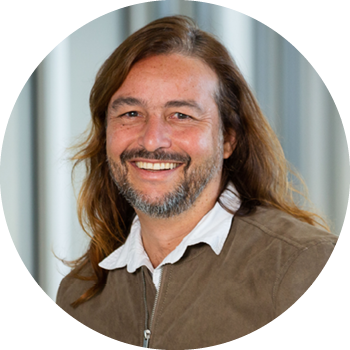
Session 1 - Wednesday, 16 September 2026
"Accelerating genomics-based surveillance and biomedical innovation for disease-causing pathogens in Africa"
Tulio de Oliveira is the director of the Centre for Epidemic Response and Innovation (CERI). He got his BSc at the Federal University of Rio Grande do Sul (UFRGS), Brazil and MSc/PhD at the Nelson R Mandela School of Medicine, South Africa. He was a Marie Curie Research Fellow at University of Oxford, U.K. and a Newton Advanced Fellow at the Sanger Institute. He has worked for over 20 years with pathogen outbreaks, including HIV, Hepatitis B and C, Chikungunya, Dengue, SARS-CoV-2, TB, Zika, and Yellow Fever Virus. Prof. de Oliveira received the Order of Merit Medal of Portugal, the German-Africa Prize, was listed as one of ten most important scientists by Nature and on TIME 100 Most Influential People.
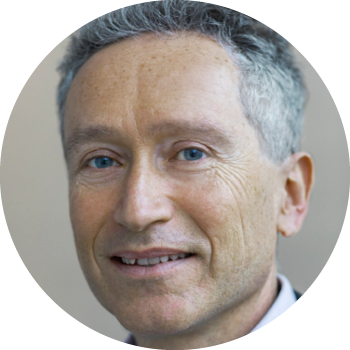
Session 2 - Wednesday, 16 September 2026
“Climate change and vector-borne diseases”
Jan C. Semenza is an environmental epidemiologist with 30 years of experience in climate change and health research. He led the US Centers for Disease Control and Prevention (CDC) response to the 1995 heat wave in the city of Chicago that claimed the lives of more than 700 individuals. He elucidated the underlying medical, environmental, societal, and behavioral causes of heat-related mortality and morbidity. As the head of the Scientific Assessment Section at the European Centre for Disease Prevention and Control (ECDC) he was responsible for research on social and environmental determinants of vector-, water-, and foodborne diseases. He is a lead author of the Intergovernmental Panel on Climate Change (IPCC) Sixth Assessment Report, co-author of the global Lancet Countdown reports, and the lead of the European Lancet Countdown adaptation working group and currently associated with Umeå University in Sweden and Heidelberg University in Germany.

Session 3 - Thursday, 17 September 2026
“RSV Across the Life Course: Clinical Burden and Real-World Performance of New Immunisation Tools”
Harish Nair is Head of Centre for Global Health as well as co-Director of WHO Collaborating Centre for Population Health Research and Training at the University of Edinburgh. He has raised over £62 million in research grant income and published over 280 articles. He was the coordinator of two large RSV consortia in Europe- RESCEU and PROMISE. He leads the Respiratory Virus Global Epidemiology Network (RSV GEN) which has developed the previous and current paediatric global all-cause and cause-specific viral (RSV, Influenza, human meta-pneumovirus and parainfluenza virus) pneumonia morbidity and mortality estimates. He is an adviser to the World Health Organisation and a founding board member of ResViNET. He is a Fellow of the Royal Society of Edinburgh, Fellow of the Royal College of Physicians of Edinburgh and Faculty of Public Health (UK) and received the Barney Graham Award for contribution to RSV Research in 2021.

Session 4 - Thursday, 17 September 2026
“Congenital CMV Screening: Maternal, Universal Neonatal and Targeted Approaches”
Ann Vossen is a clinical virologist and associate professor at the Department of Medical Microbiology at the Leiden University Medical Center. Ann Vossen started her work on congenital cytomegalovirus (cCMV) infection 15 years ago and has contributed to the understanding of the epidemiology, clinical consequences, prevention and therapy of this congenital infection. She has initiated and led two major national research projects: the CROCUS study is a large retrospective study on the burden of disease from cCMV in the Netherlands and the CONCERT study is a study on the efficacy of six weeks of oral valganciclovir in children with cCMV and isolated hearing loss. As an enthusiastic teacher, she is involved in the training of both residents Clinical Microbiology and the medical students of Leiden University. Current and previous board positions include boards of the Dutch Society for Medical Microbiology, the Foundation for Quality Assessment of Medical Laboratory Diagnostics and the European Congenital CMV Initiative (ECCI).
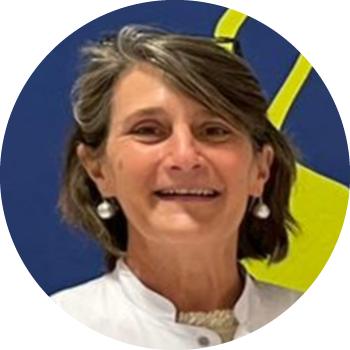
Session 5 - Thursday, 17 September 2026
“Recent advances in the management of cytomegalovirus refractory and resistant patients ”
Sophie Alain is a Professor and a virologist at Limoges University Hospital and Inserm 1092 RESINFIT, and coordinator of the National Reference Center for Herpesviruses focuses on Cytomegalovirus (CMV) epidemiology, antiviral resistance, and escape mechanisms in AIDS, congenital, and transplant contexts. She coordinates the national survey of CMV resistance, created the CHARMD herpesviruses resistance database, develops antivirals in a placenta model, and studies CMV diversity for vaccine design. Implicated in new anti-CMV evaluation and name patient programs, she was French PI for the Solstice trial, leads the NaViRe and BioSUPORT cohorts in stem cell and solid organ recipients, and contribute to the DRIVEN consortium.
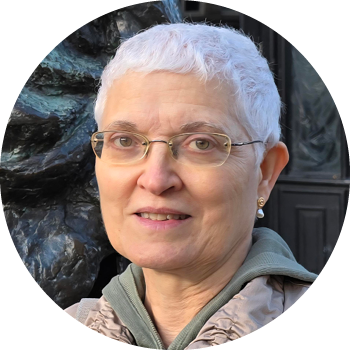
Session 6 - Thursday, 17 September 2026
“Mapping the Mutational and Phenotypic Landscapes of cVDPV2 in Sewage”
Rosa M. Pintó is a Professor at the University of Barcelona (UB). Head of the Enteric Virus Laboratory and coordinator of the Section of Microbiology, Virology, and Biotechnology at UB. She has led projects on the molecular biology of hepatitis A virus, and on their application in the development of molecular diagnostic procedures and new vaccine candidates. In recent years, she has been fully dedicated to wastewater-based epidemiology of viruses, including polioviruses. Since 2025, she has served as Vice President of the Spanish Society for Virology. She is a Full Member of the Royal European Academy of Doctors and Elected Corresponding Member of the Catalonian Royal Academy of Pharmacy.

Session 7 - Friday, 18 September 2026
"HBV matters: Practical ART decision-making in HIV-HBV coinfection"
Oana Săndulescu is Full Professor of Infectious Diseases at the Faculty of Medicine, Carol Davila University of Medicine and Pharmacy, Bucharest, senior specialist in Infectious Diseases and specialist in Epidemiology at the National Institute for Infectious Diseases “Prof. Dr. Matei Balș”, Romania. She is Chair of the ESCMID Group for Viral Hepatitis (ESGVH), Chair of Ecraid’s Clinical Liaison Council and Vice-Chair of EACS Young Investigator Network (YING). She is also Editor-in-Chief of the journal Germs and serves as Associate Editor for several other journals in the field of infectious diseases. Her fields of interest include viral hepatitis, HIV, and vaccine-preventable diseases.
Session 8 - Friday, 18 September 2026
"Roles of Epstein-Barr virus in human diseases"
Paul Farrel is an Emeritus Professor of Tumour Virology, Department of Infectious Disease, Imperial College, London, United Kingdom. His PhD research in Cambridge with Tim Hunt discovered the phosphorylation of eIF2 in response to dsRNA and his postdoc work at Yale with Peter Lengyel identified the interferon-induced protein now called ISG15. Returning to Cambridge, at the LMB he led the gene analysis of the Epstein-Barr virus DNA sequence that was being determined in Fred Sanger’s department. Continuing to study EBV biology, in 1986 he became Director of the Ludwig Institute for Cancer Research unit at St Mary’s Hospital in London and in 1996 developed the Virology Section at Imperial College London, where he is now Emeritus Professor of Tumour Virology.
Session 9 - Friday, 18 September 2026
“Human intestinal and liver organoids: a window into enteric virus biology & drug discovery”
Joana Rocha‑Pereira is an Assistant Professor at the KU Leuven (Rega Institute), Belgium, specializing in virus-host interactions and antiviral drug discovery. She earned her PhD from the University of Porto in 2013 and has developed in vitro and small‑animal models to identify antivirals against noroviruses, rotaviruses, bunyaviruses etc. Her recent work explores zebrafish larvae and stem cell derived organoids & organ-on-chip to study tropism, pathogenesis and effective treatments for enteric and respiratory viruses. She has received notable recognition, including the Heine-Medin Award 2021 (ESCV).

Session 10 - Friday, 18 September 2026
“Implementing Viral Metagenomic Sequencing in Clinical Diagnostics: Validation and Experience"
Michael Huber is the Head of Diagnostics and Development at the Institute of Medical Virology, University of Zurich, where he also leads the National Reference Centers for Retroviruses and Poliomyelitis. His work focuses on viral metagenomics and sequence-based analysis of viral infections, with extensive experience in diagnostic innovation, next generation sequencing, and laboratory medicine. He previously conducted research on neutralizing antibodies against HIV at The Scripps Research Institute in La Jolla and the University Hospital Zurich.
Session 11 - Saturday, 19 September 2026
“Sustainable laboratory Practices: Practical Strategies, Challenges, Innovations and Future Directions”
Padraig Williams is a Head of Testing on Irish Blood Transfusion Service in Dublin, Fellow of the Academy of Clinical Science and Laboratory Medicine, he holds a BSc from University College Galway and an MSc in Molecular Pathology from the University of Dublin/Dublin Institute of Technology. With over 30 years’ experience at the Irish Blood Transfusion Service, he has been Head of Testing since 2019, overseeing donor testing and patient services. He leads national blood, platelet, and tissue screening services, with responsibility for scientific leadership, staff management, quality, safety, regulatory compliance, and strategic planning.